
When Planning Your Home Budget, Start with the Building — Not the Land
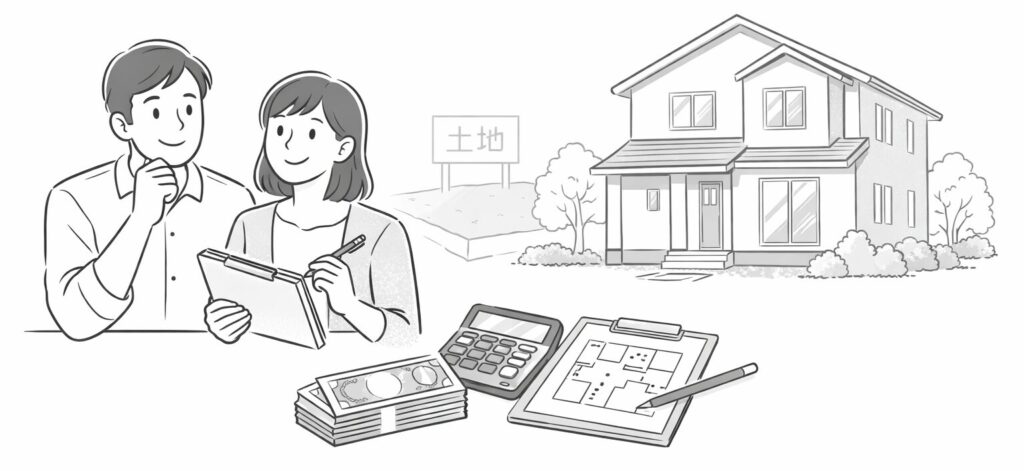
When Planning Your Home Budget, Start with the Building — Not the Land
Many people begin their home‑building journey by deciding how much they can spend on land. But in reality, the most important question comes first:
“How much will the house itself cost?”
Without understanding the true cost of construction, it’s easy to choose land that forces you to overspend later — or makes the home you want impossible to build.
- 1. Why starting with land leads to budget problems
- 2. The right order is: building → total budget → land
- 3. Construction costs vary more than people expect
- 4. Land conditions can dramatically change construction costs
- 5. A home budget should be built around your lifestyle
- 6. My role as a buyer‑side advisor
- If you’re unsure how to begin
1. Why starting with land leads to budget problems
When people set their budget like this…
“Land: 〇〇 yen House: whatever is left”
…they often run into trouble.
Land prices vary widely, and many plots require additional costs such as:
- retaining wall repairs
- boundary adjustments
- demolition
- soil improvement
- special foundation work
If you don’t know your construction budget first, these extra costs can quickly push you over your limit.
2. The right order is: building → total budget → land
A smoother and safer process looks like this:
- Decide the cost of the house you want to build (based on size, performance, lifestyle, and future needs)
- Calculate your total budget (including fees, taxes, and contingency)
- Determine how much you can spend on land (the remaining amount)
This approach prevents you from choosing land that makes your ideal home impossible.
3. Construction costs vary more than people expect
Even for the same size home, costs can differ depending on:
- insulation performance
- structural design
- earthquake resistance
- material choices
- builder’s policy and craftsmanship
A “cheap” house may look attractive at first, but can lead to higher running costs or future repairs. A “high‑performance” house may cost more upfront but offer long‑term comfort and savings.
Understanding these differences helps you make a decision that fits your life — not just your wallet.
4. Land conditions can dramatically change construction costs
Two plots with the same price can have completely different total costs once you factor in:
- slope or elevation differences
- old retaining walls
- narrow roads
- limited access for construction vehicles
- soil quality
- legal restrictions unique to Kyoto
This is why deciding on land before understanding construction costs often leads to regret.
5. A home budget should be built around your lifestyle
Your budget should reflect:
- how you want to live
- what kind of comfort you value
- how long you plan to stay
- what you want to avoid in the future
- your financial stability over time
When your lifestyle is the foundation, the budget becomes clearer — and the right land naturally follows.
6. My role as a buyer‑side advisor
I help buyers:
- understand realistic construction costs
- avoid land that creates unnecessary expenses
- choose land that supports the home they truly want
- plan a budget that leads to long‑term comfort and security
My goal is not to sell land. My goal is to help you build a home you will love for years to come.
If you’re unsure how to begin
You don’t have to start with land. You can start with understanding your home.
I’m here to help you create a budget that supports your life — and choose land that makes your future home possible.